

Zeolite activated powders Asorbio® ZAP are used as molecular sieves to remove moisture during the production of polyurethane products (polyurethane sealants, soles, coatings, flooring, etc.), where the presence of water molecules can cause negative effects.
Tabular alumina
Tabular alumina ALFA TAB® is an extremely pure and dense material produced by sintering alumina without additives at very high temperatures. Due to its high specific density, exceptional mechanical strength and thermal shock resistance, it is widely used as a raw material in the production of refractory products such as bricks and monolithic materials.
Tabular alumina ALFA TAB® has the following advantages:
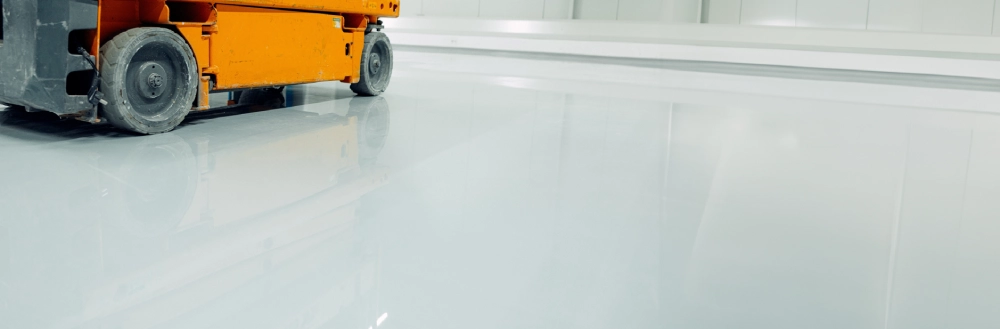
The quality of polyurethane products largely depends on the water content in the polyols, fillers and pigments used in their preparation, since moisture can react with isocyanate groups to produce CO2. The carbon dioxide remains trapped in the polyurethane in the form of small bubbles. This side reaction, while very useful when making foam resin products, is undesirable and even harmful when preparing polyurethane coatings and casting resins. In this case, the material’s mechanical properties do not meet the strict standards that require the surface of such coatings and resins to be smooth and free of pores and bubbles. This is particularly the case for polyurethane coatings applied in thicknesses of 1 to 2 mm.
Almost all polyurethane products used as anti-corrosion coatings or paints also contain several active ingredients, such as tin and zinc, which react with moisture to release hydrogen. Like carbon dioxide (CO2), hydrogen has a negative effect on product quality.
In order to remove moisture, additives must be introduced into the system, which will bind water more effectively than isocyanates, either through adsorption or a chemical reaction. Processes involving reactive substances such as alkaline earth metal oxides, aluminum alcoholates or methanoic acid esters are less suitable because the produced substances (hydroxides or alcohols) enter into difficult to control side reactions with the isocyanates, resulting in the degradation of the product quality. Using adsorption agents such as activated zeolites can produce better results.
Zeolite activated powders ASORBIO® ZAP
Zeolite activated powders ASORBIO® ZAP can be easily dispersed in any formulation and remove moisture from starting materials and from already formulated systems (1K- and 2K-polyurethane systems). ASORBIO® ZAP products vary in pore size and have been specifically developed for use in the manufacture of polyurethane products.
Zeolites ASORBIO® ZAP act as molecular sieves that selectively adsorb water molecules. Due to its porous, honeycomb-like structure, water molecules get trapped in the zeolite’s pores. The zeolite crystalline phase and the phase purity of synthetic zeolites are crucial for the adsorption efficiency. Pore size is a key factor in adsorption selectivity: larger pores are better suited to removing larger water molecules, while smaller pores are more efficient at adsorbing smaller molecules. Due to this selectivity and the small pore size, zeolites do not interfere with the reaction between isocyanate and hydroxyl groups, which is crucial for maintaining the desired properties of polyurethane. Zeolites are chemically inert, meaning they do not react with the components of the polyurethane formulation, which ensures the product’s long life and stability.
The size of the pores is determined by the product type or by the appropriate blend of different types of basic zeolites. ASORBIO® ZAP 3A, 4A and PU are used in the production of polyurethane. It should be noted that ZAP-3A has the best selectivity for adsorption of water molecules. ZAP-PU allows to modify the pot life. ZAP-4A is used for water removal in polyurethane products in less demanding applications.
Calcined alumina
Calcined alumina or aluminum oxide is a thermally treated material that has improved physico-chemical properties. Silkem produces calcined alumina under the brand name SALOX®. This material is widely used as a raw material in the production of ceramic and refractory materials due to its high purity and stability.
Calcined alumina SALOX® has the following advantages:
| Product group | Applications | Effect |
|---|---|---|
| ASORBIO® ZAP | Polyurethane production | Moisture removal – Regulating solidification time |